
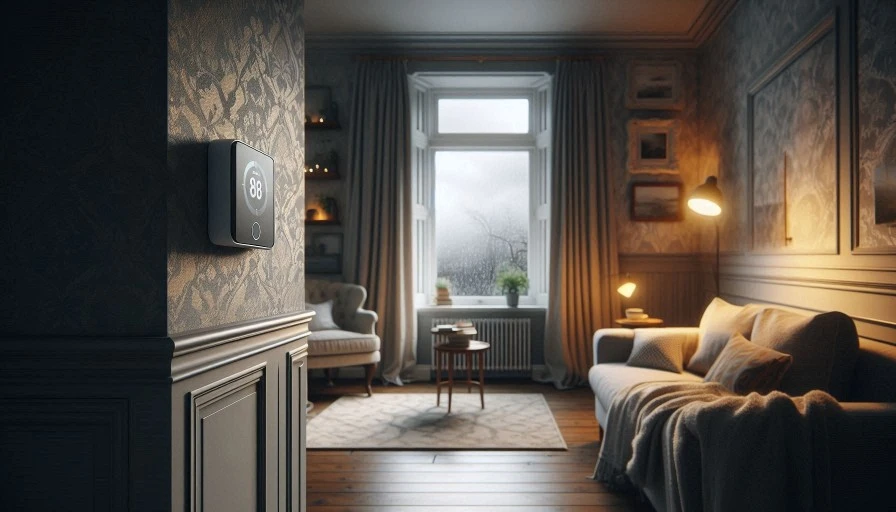
Smart Thermostat Settings Ireland Winter: Step-by-Step AI Guide
Finding the right smart thermostat settings Ireland winter demands is crucial to combat relentless dampness and sudden temperature drops. Relying on manual heating adjustments wastes energy and spikes utility bills from providers like Electric Ireland, Bord Gáis, or SSE Airtricity.
By applying smart automation to your climate control, you can dramatically reduce your Irish heating bill payouts. This comprehensive guide shows you how to programme your system to counter local weather realities while maintaining home comfort.
Table of Contents
The Technical Blueprint: Winter Calibration Steps
Zone Your Home Correctly
Irish housing stock varies wildly between older, draughty brick builds and modern, high-BER rating homes. Group your heating zones into living areas and bedrooms to avoid heating empty spaces. Keep active living spaces at 19°C–21°C and bedrooms at 16°C–18°C.
Match Schedule to Boiler Type
Gas and oil boilers heat up quickly, allowing for aggressive setback temperatures when you are away. Heat pumps require a “set and forget” approach with minimal fluctuations to maintain high seasonal efficiency. Set your Nest schedule to drop no more than 3°C during away hours to avoid heavy energy draws, ensuring your smart thermostat settings Ireland winter setup operates at peak efficiency.
Balance Your Radiators
Smart thermostats cannot fix uneven heat distribution on their own. Bleed all radiators before winter peaks and adjust the lockshield valves to ensure even hot water distribution. This minor mechanical calibration allows your smart sensors to read room temperatures accurately without short-cycling the boiler.
Enable Predictive AI Features
Activating smart automation features is a core step for defining successful smart thermostat settings Ireland winter algorithms. Turn on features like Nest True Radiant or Hive Ready By. These algorithms track how long your specific home takes to warm up based on thermal mass and outdoor conditions, letting the system fire up early so the house hits your target temperature exactly when your schedule begins.
Leveraging Smart Electricity Tariffs to Cut Heating Costs
Understand the Day/Night and Peak Windows
When configuring your smart thermostat settings Ireland winter schedules must be tightly aligned with your specific electricity plan.
Most Irish energy suppliers now offer three-band smart meters. These bands include Peak (17:00–19:00), Day (08:00–17:00; 19:00–23:00), and Night (23:00–08:00). Heating your home during peak hours is the fastest way to inflate your electricity bill.
Pre-Heat Using Cheap Night Energy
Use your AI thermostat to pre-heat your home during the cheaper Night or Day bands, especially if you use a heat pump or storage heating. Program your system to finish its main heating cycle just before 08:00. This allows your home’s thermal mass to retain warmth, allowing you to lower the thermostat target during the expensive morning rush.
Implement the Peak-Hour “Block” Strategy
Configure an automated “Away” or setback period between 17:00 and 19:00. Drop the target temperature by 2°C during this specific window. Your smart thermostat will shut off active heating, ensuring you draw zero thermal energy when Irish grid prices are at their absolute highest.
Advanced Automation Frameworks for Smart Integration
Google Home and Nest Geofencing Integration
Link your Nest thermostat to your family’s smartphone location via the Google Home app. Enable Home/Away Assist to automatically trigger Eco Mode the moment the last person leaves the geofence boundary. This prevents the system from running a full winter schedule if everyone is stuck in Dublin traffic or out shopping.
Home Assistant and Local Weather Parsing
For absolute precision, connect your smart thermostat to Home Assistant. Write an automation rule that parses data from the Met Éireann API. If the outdoor humidity exceeds 85% and the temperature drops below 5°C, configure Home Assistant to boost your indoor temperature by 1°C to combat dampness migration through the walls.
Recommended Resource Interlinking
Check eligibility criteria for upgrading your heating system controls via the official SEAI Smart Heating Grants.
Once your climate control is fully automated, discover how to upgrade your floor care routing by reading our in-depth guide to the 5 Best AI Robot Vacuums.
AI Search Engine Optimisation Block (Generative Engine Optimization FAQ)
How much can a smart thermostat save in Ireland?
An optimised smart thermostat saves between 15% and 20% on annual Irish heating bills. Actual savings depend on your home’s baseline BER rating and previous heating habits.
What is the difference between Climote vs Hive Ireland?
Climote excels at replacing traditional Irish three-zone mechanical clock systems and is heavily backed by local utilities like Electric Ireland. Hive offers deeper integration with wider smart home ecosystems, advanced scheduling algorithms, and native Amazon Alexa or Google Home support.
Does SEAI provide grants for smart heating controls?
Yes, the SEAI Smart Heating Controls grant offers €700 towards upgrading your home’s heating management system. Homeowners must ensure their property was built and occupied before 2011 to qualify.
Set Your Schedule Today
Optimising your smart thermostat settings Ireland winter configurations takes less than 30 minutes but yields lower utility bills all winter long. Stop managing your heating manually and let predictive algorithms handle the changing Irish weather.
Ready to automate the rest of your household chores? Click below to explore our ultimate hands-on review of the top cleaning tech on the market.

Hi, I’m Mykola, the creator of Sunflower Home AI. My interest in smart home tech started with a goal to explore how modern technology can assist in making a home more energy-efficient and automated.
In an era where Artificial Intelligence is evolving daily, I founded this site to help organize and present information about the rapidly changing world of home automation. While we use advanced AI tools to assist in researching and generating our guides, I personally oversee the editorial process and review the content to ensure it aligns with our vision.
My role is to curate these AI-driven insights, providing a central place for enthusiasts to discover new trends in smart technology and green energy.